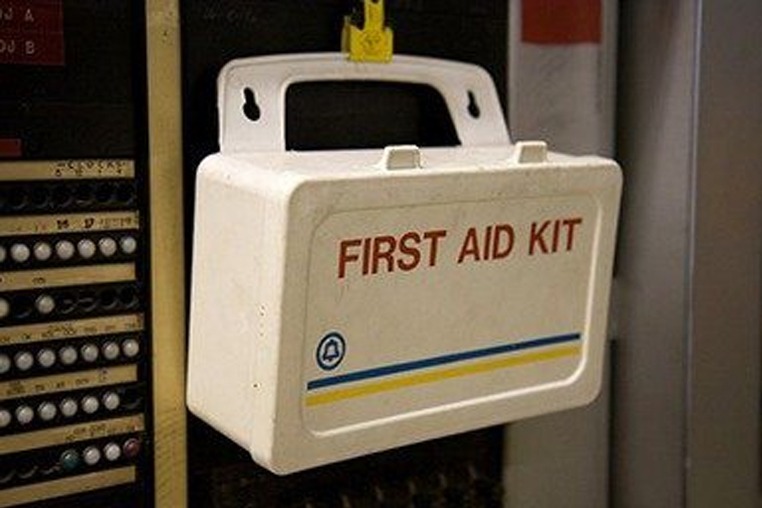
First Aid Courses being run in countries all over the world. You need to Book in. Great rate $100. Save a family members life. Asthma and Anaphylaxis. CPR.
Qatar Red Crescent Society’s (QRCS) health education section offered first-aid training for 1,050 beneficiaries at schools and social centres in the Al Shamal region during the first semester of the current academic year.
Sponsored by the Ras Laffan Community Outreach Programme (COP), QRCS’s ‘I Am a Paramedic’ programme is designed to promote first-aid and injury care skills among students, teachers and parents.
The programme has covered 750 trainees in 17 schools and academies, with health education and practical training sessions delivered by specialist medical trainers, QRCS has said in a statement.
During the Qatar Spring Festival, a first-aid workshop was held for 50 students at the Qatar Voluntary Centre. The event was attended by representatives from the Ministry of Education and Higher Education.
In co-operation with Al-Yarmouk Preparatory School for Boys, QRCS held a series of first-aid workshops over a week for the benefit of 250 students, staff and parents who participated in the festival.
The sessions introduce the theoretical and practical basics of first-aid, including cardiopulmonary resuscitation, suffocation, bleeding, fracture, nosebleed, burn, eye injury, epilepsy, asthma, poisoning, victim moving techniques, early trauma intervention, home safety and the health effects of cigarette smoking.
These activities fall under the blanket ‘QRCS School Programme’, which supports the educational system by capitalising on the capacity of the youth, raising awareness of social solidarity and responsibility, and preparing student leaders who contribute to school and community protection against disaster and environmental risks, the statement notes.
The components of the programme are as follows: the ‘I Am a Paramedic’ health programme involves first-aid training and health education on nutrition, hygiene, communicable diseases, home safety, oral health and other relevant topics; the ‘Safe School’ risk reduction programme seeks to improve community disaster preparedness and effective response; and the ‘Social Peace and Integration’ programme organises informative lectures to enrich positive values among school students, such as interactive communication, open-mindedness, behavioural discipline, psychological balance and mutual respect.
Australian cricket legend Mitchell Johnson shows off his gruesome head injury — after having a fight with a chin-up bar.
The left-arm fast bowler, 36, needed 16 stitches in his scalp after being rushed to hospital with a nasty cut.
A series of four photos posted to Johnson’s Instagram page showed the initial laceration, him lying on a bed receiving treatment and the stitches.
A final snap revealed a smiling Johnson, indicating all was OK after his procedure.
“If you don’t like blood and cuts then don’t look through these pics!” He captioned the images.
“Not the best thing I’ve ever done to myself but I’m am [sic] fine #toohardtoexplain #dontfightchinupbar #stilldontknowhowitspossible.”
At least he was met with a barrage of well wishes following his mishap
“Oh goodness me … Horrific to see a wonderful person getting injured like this. Can’t digest that injury, is a big and a massive one. Our prayers will be with you to get well soon sir,” one user posted.
“What. I can’t believe this,” another added.
“How the heck could this have happened?” an intrigued fan commented.
Johnson is best known for utterly dominating England’s batting order in the 2013-14 Ashes series in which the hosts won 5-0.
He mustered a 37-wicket haul and was awarded Man of the Match in three of the five Tests, as well as being named Player of the Series.
The man known as ‘Midge’ was also a crucial cog in the machinery when Australia won the World Cup for a fifth time in 2015, beating New Zealand by seven wickets in the final.
Hopefully Mitch had someone around who had been to a first aid courses. Im sure a few stitches would have done the trick.
First aid course bookings today to learn these skills. Great trainers and excellent RTO. Cheap First Aid Course. Check dates at www.canberrafirstaid.com
“It’s really important to learn first aid, we are not asking people to make things complicated or become doctors or paramedics,” Tracey Taylor, from the British Red Cross told The Sun Online.
“It’s about learning a few simple skills so you can act in that situation and know that you have done the best possible thing to help.
“Nobody knows when they might need first aid, a lot of situations are very quick and very sudden and you need to be able to think on your feet and act quickly and calmly.”
Here we reveal what you need to know, in the case of seven different types of emergency…
Bleeding heavily? First Aid skills you need to know to save someone’s life
1. Bleeding heavily
If someone has had an accident or cut themselves badly, the first thing you need to do is apply pressure to the wound to help stop the bleeding.
You can use whatever is around, a jumper, a blanket, a towel, to apply firm pressure to create a plug to slow the bleeding.
The next step is to call 999 and continue holding pressure on the wound until help arrives.
“Whatever you’ve got to hand, whether that is a T-shirt or a scarf or a towel can be used to apply really firm pressure on the wound to stop the bleeding,” Tracey said.
“It is really important to stop them losing too much blood.
“It is a life-threatening injury and if people don’t apply pressure then someone could die.”
Unresponsive and not breathing? First Aid skills you need to know to save someone’s life
2. Collapsed and not breathing
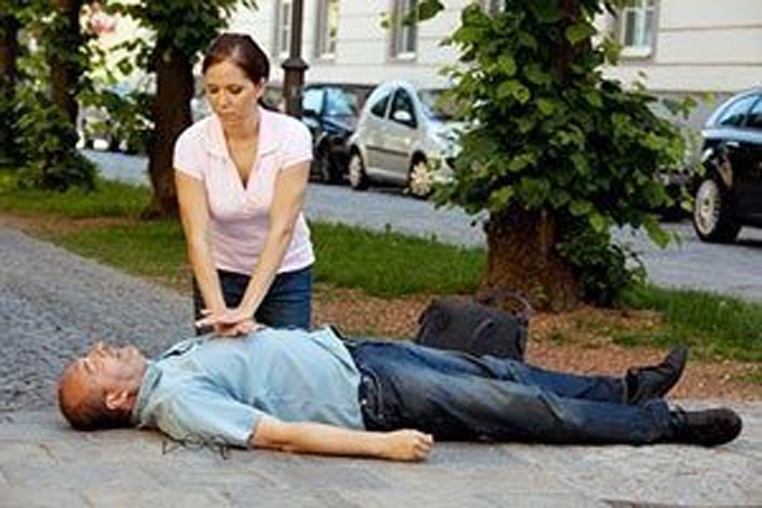
If someone is unresponsive and not breathing you need to call 999 as soon as possible and begin CPR.
The most likely cause of this is a cardiac arrest.
A cardiac arrest, also known as cardiopulmonary arrest, happens when your heart suddenly stops pumping blood around your body – and is different from a heart attack.
If someone is having a cardiac arrest they will collapse unconscious and their breathing may stop
Repeat at a rate of 100 to 120 times per minute.
If you have trouble keeping pace, do the compressions to the tune of the Bee Gee’s song Stayin’ Alive to keep time in your head.
If you know how to, and are comfortable doing so, you can also perform rescue breaths at the rate of two breaths to every 30 compressions.
You should keep going until help arrives.
“You need to get help on its way as quickly as possible and you can start doing chest compressions,” Tracey said.
“And if you are in a public place you could find the automated external defibrillator (AED) to help the person.
“AEDs are becoming much more common in public places like leisure centres, train stations, shopping centres and places like the hospital.
Heart attack: First Aid skills you need to know to save someone’s life
3. Suspected heart attack
In contrast to a cardiac arrest, a heart attack is when one of the coronary arteries becomes blocked.
The heart muscle is then robbed of vital oxygenated blood, which if left untreated, can cause the heart muscle to begin to die.
Like a cardiac arrest, a heart attack is a life-threatening emergency.
You need to call 999 immediately.
You should also make sure the person is comfortable and try to keep them calm while the ambulance arrives.
“A lot of people get mixed up between a heart attack and a cardiac arrest,” Tracey said.
“If someone is having a heart attack then that can lead to cardiac arrest but in the first stages they will be presenting as someone who is still awake and still talking.
“But they may have really severe chest pain that can go up into their jaw, down their and into their stomach, they might also be very pale and sweaty.
“If you suspect someone is having a heart attack get them to sit down and rest while you call for an ambulance.
“While help is on it’s way try to keep them calm.”
4. Choking
If someone is choking they may clutch their throat or chest while gasping for air.
They won’t be able to speak to tell you what is wrong, so you have to act quickly.
Stand behind them and bend them forward before giving them five firm blows between the shoulder blades, known as back blows, to try and dislodge whatever is choking them.
If this doesn’t work you need to try the Heimlich manoeuvre.
Call 999 if the object doesn’t shift and continue using back blows and the Heimlich manoeuvre until an ambulance arrives.
“Back blows create a vibration within their airway which will hopefully push the object that they are choking on out,” Tracey explained.
“The back blows need to be firm so there is enough force to generate that vibration within the airway.
“If it is a small child, you would moderate the amount of force you are using.”
WHAT TO DO IF YOUR BABY IS CHOKING
Step 1. Give your baby five back blows
Hold your baby face down, resting them along your thigh with their head lower than their bottom.
Hit them firmly on their back between the shoulder blades up to five times.
If back blows don’t dislodge the object, move on to step two.
Step 2. Give up to five chest thrusts
Turn your baby over so they are facing upwards and place two fingers in the middle of their chest just below the nipples.
Push sharply downwards up to five times.
Step 3. Call 999 if the object does not dislodge
And continue with cycles of back blows and chest thrusts until the blockage clears or help arrives.
5. Unresponsive but breathing
If someone passes out in front of you, the first thing you should do is check to see if they are still breathing.
You can do this by tilting their head back and feeling for breaths.
If they are breathing you need to move them onto their side and tilt their head back to open their airways.
You should also check that nothing is obstructing their airways.
Call 999 as soon as you can and wait with them while help arrives.
“It is really important to get them in a position where their airway is clear, on their side is perfect because their tongue will fall forward and anything in their mouth will drain out,” Tracey said.
“While they are in that position you should be reassuring them and talking to them, even if they can’t hear you and keep checking their breathing until help gets to you.”
6. Taken a fall
If you or a loved one trip over, and suffer a sprain or strain, first things first – apply an ice pack.
This could even be just a bag of frozen veggies,but just remember to wrap it in a tea towel. This will help reduce the swelling and pain.
If you suspect it’s more than a strain or sprain, and could be broken, it’s important to seek medical advice.
“Falls are a very common reason why over 65s hurt themselves and end up having to go to hospital,” Tracey explained.
“There are different things that can be caused by falls, depending on how they have fallen.
“If we are talking about a broken bone, the key thing to look out for is pain in the limb, the limb might be a different shape or they can’t move or bend it, and also swelling and bruising.
“Broken bones are difficult to diagnose without an x-ray, so if you are unsure treat it like a broken bone until you can get to hospital.”
If someone has burned themselves you need to run the injury under cold running water for at least 10 minutes
7. Burns
Cool the burn under cold running water for at least ten minutes.
If you’re out and don’t have water on hand, you can use any cold liquid, think milk, orange juice, even a fizzy drink.
Then loosely wrap the burn in some cling film, or a clean plastic bag.
This will reduce the pain and help prevent infection.
If your baby or child has been burned, seek medical attention straight away.
“It is important to act as quickly as possible with burns – the quicker you can cool the burn you are lessening the impact of the injury,” Tracey said.
“The best thing to use to cool a burn is cold running water, so put the cold tap on and put the burn underneath the water for at least 10 minutes.
“Once you have cooled it the best thing to use to cover the burn is clingfilm to protect it from the air and the risk of infection.”
First Aid Course in Canberra. Book now to learn asthma and anaphylaxis first aid. Book now for free first aid manual and CPR face mask.
Increasing preventer medication at the time of an asthma flare-up should not be recommended for children, a study suggests.
Sarah Wiedersehn
Australian Associated PressMARCH 8, 20182:55PM
Significantly increasing a child’s use of inhaled steroids at the first signs of an asthma flare-up is ineffective and may be associated with slowing their growth, an international study has found.
Published in the New England Journal of Medicine, the US research challenges the practice of increasing the dosage of inhaled glucocorticoids (preventer medication) by five times when asthma symptoms begin to worsen among children with mild-to-moderate asthma in a bid to avoid exacerbation.
Paediatric respiratory specialist Dr Louisa Owens, a spokesperson for the National Asthma Council, said the practice is not part of current childhood asthma treatment recommendations here in Australia.
However she said the research is concerning and warrants caution because of the potential for “significant harm” especially for teenagers with asthma.
According to Dr Owens, the adult asthma guidelines, which do recommend increasing inhaled steroid use during a flare-up, are often used for adolescents.
“Inhaled corticosteroids are generally considered quite safe so I think it is very concerning with very short periods you are still seeing significant height deficits in children in this study,” said Dr Owens.
The researchers at the University of Wisconsin School of Medicine and Public Health studied 254 children aged 5 -11 with mild-to-moderate asthma for nearly a year.
For the randomised, doubled-blinded trial all children were treated with low-dose inhaled glucocorticoids (two puffs from an inhaler twice daily). At the earliest sign of a asthma flare-up the researchers continued giving low-dose inhaled steroids to half of the children and increased to high-dose (five times the standard) in the other half, twice daily for seven days during each episode.
The rate of asthma exacerbations among the two groups were not significantly different despite the intervention group being exposed to 14 per cent more
Though the children in the high-dose group had a 14 per cent more exposure to inhaled steroids the number of asthma symptoms, the rate of exacerbations and use of reliever medication albuterol, such as Ventolin, were all similar between the two groups, according to the study.
However the growth rate of children in the high dose group was about about 0.23 centimetres per year less than the rate of growth for children in the low-dose group.
“In children with mild-to-moderate persistent asthma treated with daily inhaled glucocorticoids, quintupling the dose at the early signs of loss of asthma control did not reduce the rate of severe asthma exacerbations or improve other asthma outcomes and may be associated with diminished linear growth,” the authors concluded.
Lead researcher Daniel Jackson, associate professor of paediatrics at the University of Wisconsin said hoped the trial findings will better inform caregivers to make informed decisions about how to treat their young patients with asthma.
First Aid Course in Canberra in Dickson. Every Week. Free First Aid Manual. Excellent RTO and Trainers. Book Now.
By Carolyn Crist
(Reuters Health) – Parents and caregivers should know what to do when an extreme allergic reaction known as anaphylaxis occurs, according to a new resource published in the medical journal JAMA.
Adults should be aware of the signs and symptoms of this kind of reaction and be prepared to respond with an emergency plan and epinephrine injections, if needed.
“Pediatric allergy reports are increasing in incidence – it is unclear whether this is increased recognition or a true increase in incidence – regardless, it is a public health issue as food allergies are common and have various degrees of presentation,” said Dr. Elliott Melendez of Johns Hopkins All Children’s Hospital in St. Petersburg, Florida, who co-wrote the one-page primer intended for patients and caregivers.
The content of the page, accessible for free (http://bit.ly/2oTXzlM), is based on recommendations given by the Centers for Disease Control and Prevention. The resource emphasizes the symptoms and treatment of anaphylaxis caused by foods, medications or insect bites.
The primer was published alongside a summary of guidelines for physicians for preventing and treating peanut allergy, which afflicts 2 percent of children and 1 percent of adults in the U.S., and is the number one cause of death due to food-related reactions.
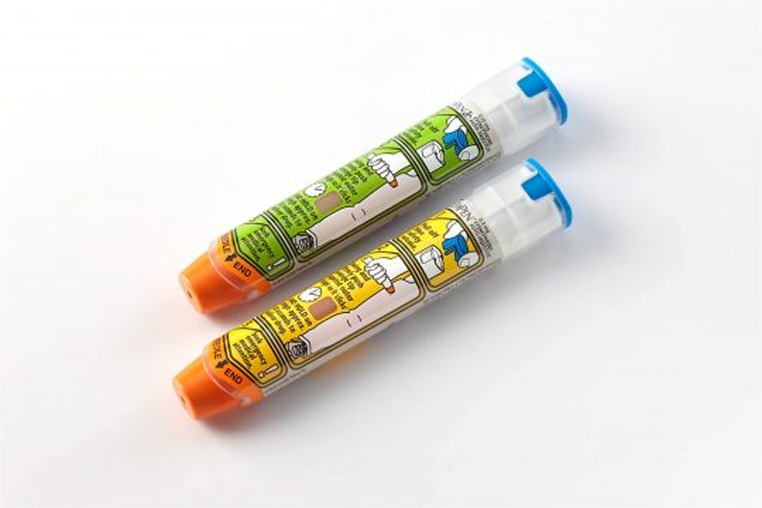
Anaphylaxis symptoms can include vomiting, throat swelling, face or lip swelling, rash or feeling faint. The only treatment, according to the primer, is subcutaneous epinephrine from an injector such as the EpiPen.
“Parents and patients most commonly see mild symptoms and delay treatment first by administering diphenhydramine (Benadryl) when epinephrine should have been administered,” Melendez told Reuters Health by email.
Anaphylaxis is a serious and potentially life-threatening condition that typically occurs within seconds to minutes of an allergic exposure, the resource says, but some reactions can be delayed for several hours. Symptoms typically involve more than one organ system, so one symptom alone, such as hives, doesn’t mean anaphylaxis. Multiple symptoms, such as hives and difficulty breathing at the same time, are more of a concern.
Typical symptoms for the skin include itching, flushing, hives, swollen lips or tongue. Breathing-related symptoms include fast and noisy breathing, gasping for air, drooling and turning blue. Stomach symptoms include vomiting, abdominal pain and diarrhea. Heart symptoms include fainting, weakness and low blood pressure.
“Parents should understand what’s happening when multiple parts of the body are involved. What does belly pain have in common with itchy eyes for their children?” said Dr. Stephen Tilles of Northwest Asthma and Allergy Center in Redmond, Washington, who wasn’t involved in the guide.
“As horrible as anaphylaxis can be, it’s one of the easiest conditions to resolve,” he told Reuters Health by phone. “Having an action plan, as well as an epinephrine injector, are the keys to responsive treatment.”
The resource advises avoiding exposure to foods, medications and insects that spark allergic reactions, as well as teaching children how to protect themselves. It also suggests having two epinephrine injections available and encouraging your child to wear a medical alert bracelet.
The authors also note that a second anaphylactic reaction can occur within 24 hours without a second exposure to the allergenic substance. One in five children have a second reaction, and the only way to decrease the likelihood of this happening is to make sure epinephrine is given as soon as possible after the onset of symptoms, according to the resource.
“Anaphylaxis is increasingly preventable and treatable, which is wonderful news,” said Dr. Chitra Dinakar, the clinical chief of allergy and asthma at Stanford Health Care in California, who wasn’t involved in drafting the resource.
“It is possible to identify the triggers, create strategies to minimize exposure to the known triggers, and devise plans of action to detect and treat anaphylaxis early to prevent harmful consequences,” Dinakar said by email. “There are also emerging treatment options to desensitize oneself to some of the triggers.”
SOURCE: http://bit.ly/2oTXzlM JAMA, online March 6, 2018.
First Aid Course in Canberra. Check our upcoming dates. Nationally Recognised Certificate with a Free first aid manual.
More than $50,000 is needed by the Australia Red Cross Dubbo to ensure anyone who has a cardiac arrest is given the best chance of survival.
The Red Cross aims to make Dubbo a “Heart Safe City”. First aid trainer George Chapman wants to see automated external defibrillators installed in all high traffic areas, no more than two minutes apart.
The third $3300 machine was installed at Dubbo Grove Pharmacy on Boundary Road but 20 were needed, Mr Chapman said.
“I’ve had a lot of phone calls but haven’t seen much money,” Mr Chapman said.
I’ve had a lot of phone calls but haven’t seen much money.
The first aid trainer said the defibrillators were expected to save up to two lives per week. Dubbo Hospital treated 322 people annually in Dubbo with heart conditions and not all of those patients survived, Mr Chapman said.
The Rotary Club of Dubbo Macquarie has also jumped on board the campaign, launching an appeal to raise money for more AED units.
“We’ve had a great start but we’re hoping the community will actively get behind this campaign so we can reach our goal of having AED units in all high traffic areas of Dubbo that are no more than two minutes apart,” Mr Chapman said.
Club Dubbo has already donated two machines and another has come from Dubbo RSL Memorial Club. They are located in Myall Street, Tamworth Street and now on Boundary Road. Each location that has a defibrillator will have a sticker in the window in case it is required.
The benefit of the automated external defibrillators was that anyone could use them, Mr Chapman said. The machine talks its user through each step of the process.
The battery and pads will each last eight years.
Club Dubbo CEO Rod Firth said he would continue to support the campaign until there were enough defibrillators in the city.
Dubbo Regional Council is also supporting what mayor Ben Shields has called a ‘life-saving’ campaign.
“The survival rates of cardiac arrests that happen outside hospital will be given a much needed boost by having defibrillators in locations that are heavily frequented,” Cr Shields said.
Check out our upcoming first aid course in Canberra and learn how to use a defibrillator.
First Aid Courses in Canberra. Nationally Recognised Training with first aid certificate. Excellent Trainers. Courses filling fast.
First aid training was on the program agenda, but not methods such as CPR or the Heimlich maneuver. Instead, the Youth Mental Health First Aid training focused on ways to help youth experiencing a mental health crisis.
Twenty-five people — including high school and college students, teachers and professors, parents, a pastor and a nurse — gathered Saturday at the MU Extension in Boone County. The program’s goals were to demystify mental health stigmas and to teach people how to provide immediate help in a mental health emergency.
The participants each earned a certificate upon completing the day-long training. The event was cohosted by the MU Extension in Cooper County and Children’s Grove, a local charity that supports young people’s mental and emotional health.
Sarah Traub, a human development and family science specialist based at the MU Extension in Cooper County, and Alejandra Gudiño, an officer for MU’s Division of Inclusion, Diversity and Equity, led the training. They followed a curriculum set by Mental Health First Aid, an international nonprofit that trains people to “identify, understand and respond to signs of mental illnesses and substance use disorders.” The nonprofit also trains people to provide emotional support to people with a mental health or substance abuse problem.
Gudiño said they have offered the training to educators everywhere in Boone County except Columbia, where they hope to bring it soon.
She also said the idea is for people to have a conversation with and inspire hope in those they’re trying to help.
“Recovery is there, even in the most difficult cases,” Gudiño said. “Treatment is there.”
Both Traub and Gudiño stressed that the course is not meant to train people to diagnose mental illnesses, but rather how to care for people and help connect them with resources. Gudiño said she wants people to know how to talk to those suffering and “listen with good hearts and a little bit of information.”
During the training, participants talked about the importance of seeing mental illness the same way as physical illness.
“It’s important to have regular first aid because you don’t want to bleed out,” Katie Ensign, one of the participants, said. She said having mental health first aid is just as important, “because you don’t want to bleed out mentally either.”
Gudiño said this requires suspending judgment on others.
“We don’t judge people when they say, ‘Oh I have to go and put insulin because I have diabetes,’” she said.
Participants expressed various reasons for wanting to take the course.
Heather Dougan, a senior at Southern Boone High School in Ashland, said she has been waiting since last year to take it. She wants to be a social worker, and hopes this training will help her decide whether she wants to work with youth.
Molly Ring, an art teacher at Benton High School in St.Joseph and an MU graduate, said she came to learn more tools to use with her own students. In the seven years she has been teaching, she said she has adapted how she responds to her students’ behavioral issues.
“I want to get to the heart of what’s going on instead of being reactive,” Ring said. “Behaviors are usually not independent. There’s always something that’s a deeper cause.”
She also said she focuses on building relationships with students and doesn’t always make discipline the first step.
“The primary thing that helps me, even in a frustrating situation in the classroom, is approaching those situations with care — genuine care and concern — and trying to make that the first priority,” Ring said.
The course also covered the national prevalence of mental health issues among children. According to the National Alliance on Mental Illness, 21 percent of 13- to 18-year-olds experience a severe mental disorder at some point, along with 13 percent of 8- to 15-year-olds.
Participants brought up several potential problems with data on mental health illnesses. They discussed how it can misrepresent certain age groups, genders and ethnicities because some of those groups may be less likely to report mental illness for a variety of reasons.
First Aid Course in Canberra, Book a Nationally Recognised Course Today. Excellent Teachers. Free First Aid Manual and CPR Face Mask.
THE MOTHER of Alby Fox Davis, who choked to death after swallowing a toy bouncy ball, has revealed more heartbreaking details about his death, including the size of the ball.
Anna Davis posted to her Instagram page, The Small Folk, on Saturday with a side-by-side image of the ball compared to a 50 cent coin.
Alby’s mum, Anna, posted this comparison to her Instagram page to show what the ball that choked her son looked like.Source:Instagram
The ball is larger than a 50 cent piece.Source:Instagram
The devastated mother took to Instagram today after what she described as “many ignorant, hurtful and incorrect assumptions that have been formed regarding the more specific details of Alby’s passing”.
“I tried to save our beautiful boy (including, but not only, undertaking CPR for 16 excruciating minutes until paramedics arrived),” Ms Davis, from Wynyard in Tasmania, posted on Instagram.
“I was three feet away from Alby when the incident occurred and was by his side within seconds.
“The ball was larger than the 50c piece/film canister size-recommendation for toys given to young children, and the ball packaging states ‘not for children under three years’.”
“Being only a few days away from turning 4, Alby was almost one year older than this advice.”
Ms Davis’ post was met with sympathy, with many commenters shocked by the size of the ball that caused her son to choke.
“We just went to a 4th birthday party where the prizes were these balls,” one person wrote.
“Could have happened to anyone.”
“I would have never, ever imagined this could happen with a ball this size,” another added.
“We have two, I just tossed them. Never again.”
While Ms Davis’ original tribute was met with heartfelt messages of support, some commenters questioned why CPR wasn’t conducted.
According to the packaging of the bounce balls, which are sold in packets of six for $10, are not suitable for children under the age of 3.
On Thursday, Ms Davis posted her heartbreaking tribute to her son, Alby, who is survived by his older sister Sage and younger brother Acre.
“Yesterday afternoon, our beautiful, beautiful Alby, our darling baby boy, grew wings and flew from this earth,” she wrote.
“Minutes pass like hours and the gaping hole in our lives and hearts is completely incomprehensible.
“We adore you beyond belief, our sweet little fox. Forever three, forever free.”
In a statement sent to news.com.au, the Coroner’s Office confirmed it had begun investigating the death of a child on Tasmania’s North-West Coast.
“A Coronial investigation has begun into the death of a child on Tasmania’s North-West Coast on Monday,” the statement read.
“As the matter is ongoing, no further information can be released at this stage.”
A GoFundMe page has since been launched to assist the family, who live in Wynyard Tasmania, as Anna is self-employed and her husband, Simon, is a relief teacher and isn’t entitled to paid leave.
The page has gained more than $240,000 in donations, with people around the country reaching out to support the family in any way possible.
Amber Cooper, who launched the GoFundMe page, said a memorial event will be help on Sunday evening at the C3 Church in Austin Street in Wynyard at 7.30pm for friends, family and community members who wish to light a candle for Alby.
On Friday, Tasmania’s Consumer Services Office said it was working with police to investigate the incident.
“We will attempt to establish the retailer from which the toy was purchased, and from there the manufacturer, to determine the specific nature of the toy and whether or not it complied with product safety laws,” executive director Dale Webster said.
“This office works closely with the ACCC and other state regulators on product safety issues. Consumer information and guides, including information on banned products and recalls, are available through a national website.
“My sympathies go out to this young family and the Wynyard community.”
If this doesn’t get you to book in to a first aid course then nothing will. www.canberrafirstaid.com
First Aid Training in Canberra at a great rate. Book Now. free First Aid Manual. Excellent RTO and Training Provider.
THREE weeks after Katrina Pitman gained her first aid qualification, she helped to save a life.
And now after experiencing first-hand that tragedy can strike anywhere and any time, Miss Pitman encourages others to invest in learning lifesaving skills.
While aboard a cruise ship and headed to a party, the Fraser Coast woman saw an elderly man collapse.
She rushed to his side and performed CPR alongside another person using the freshly learned knowledge.
The pair kept the man alive before a medical team arrived.
“I was relieved to know that I could help,” Miss Pitman said, speaking of the incident.
“If I didn’t know what to do, I would have felt helpless.”
The 30-year-old sleep study technician initially completed the first aid course as part of a job requirement, and said she never expected to be put in a situation of needing to perform lifesaving procedures.
“I was doing what I was taught to do; first seeking a response, looking for danger, and checking to see if they were breathing,” she said.
“Luckily I had another person to assist with the compressions.”
Miss Pitman was later informed that her quick reaction was a reason why the man was still alive when transported for treatment.
“I am no hero, I did what any able person would do,” she said.
“If you do find yourself needing to perform first aid, look after yourself, and seek counselling afterwards if you need to.
“It has really highlighted the importance of knowing first aid.”
First Aid Courses in Canberra. Book in Now. Free First Aid Manual. Nationally Recognised Certificate. Excellent RTO and Training Provider.
As the world’s best winter athletes compete in PyeongChang for the 2018 Winter Olympic Games, the heavy demands of both training and competition will leave many of them with breathing problems.
Exercise-induced asthma is the most common medical problem among winter Olympic athletes, especially among cross-country skiers. Nearly 50% of these athletes suffer from the condition, closely followed by short-track speed skaters at 43%. For figure skaters it’s 21%, Nordic combined it’s 17%, and for ice hockey it’s 15%. By comparison, around 9% of the UK general population suffers from asthma.
The combination of sustained high breathing combined with cold, dry air increases winter athletes’ risk of asthma-related conditions. (Indoor speed skaters also have to deal with increased pollution in the form of particulate matter from ice resurfacing vehicles.) Cross-country skiers, for example, increase their breathing rate from about six litres per minute at rest, to 180 litres per minute during a race. This huge increase in breathing results in large volumes of cold, dry air being drawn into the lungs. This can cause the smooth muscle in the airway to narrow, reducing the athletes’ ability to breathe normally.
This happens by two processes. The first relates to the airway becoming dehydrated which causes a release of inflammatory cytokines – messenger molecules that cause the airway to become narrow and inflamed.
The second process relates to respiratory heat loss which results in airway narrowing through nerve stimulation. When the athlete stops exercising, the airway narrows even further by a dilation of blood vessels as the airways warm up again.
If an athlete is diagnosed with exercise-induced asthma, they are usually given the standard treatment for asthma: a preventer asthma inhaler, containing steroid medication. This works by reducing the inflammation and sensitivity of the airways, helping them breathe. However, athletes have to be careful about the type of inhaler they use as some drugs – such as salbutamol – could put them at risk of an anti-doping violation.
Alternative therapies
As well as using drugs to treat exercise-induced asthma, athletes can supplement their inhaler therapy with:
Heat-and-moisture face masks: Face masks worn during training and prior to competition are able to capture the heat and moisture in exhaled breath and use it to warm and moisten the inhaled air as a defenceagainst airway dehydration and subsequent narrowing.
Fish oils:Studies suggest that the use of omega-3 fish oils can reduce airway inflammation and provide a protective effect against asthma associated with exercise.
Prebiotics:Recent evidence suggests that a dietary prebiotic supplement that targets the good bacteria in the gut can reduce the severity of asthma in physically active asthma patients and reduce airway inflammation.
Winter athletes who suffer from exercise-induced asthma can use an inhaler alone, or in combination with one or more of the above treatments. By doing this, athletes can maintain their airway health and function, allowing them to compete without compromising their performance.