
All posts by Ryan Davis Philip


Do airline Cabin Crew have sufficient First Aid Training

First Aid Training Canberra. There are many industries starting to add first aid training to their list of priorities but we are still falling behind. Book in to a first aid training course now so you are prepared. Here is a link to our courses.

Ryanair hit headlines recently after a passenger was burnt by scalding tea on one of its flights – and the incident has cast doubt over whether cabin crew are getting the right first aid training.

Val Tredget, 51, suffered burns on her legs after her tea spilt on a flight to Budapest. While accidents happen, the first aid care she then received from a flight attendant appeared to be incorrect.

Ms Tredget, who is a nurse, claims she asked for cold water but was instead given paper towels. She told the Daily Mail: “I pulled the trouser leg up and said, ‘Look, it’s blistering already, I need water. I am a nurse, I know what’s needed’. She just looked at me. I said, ‘You need to pour water on it.’ She ran off to the back of the plane and came back with a handful of blue paper towels and said, ‘Here, use them all.’ I am not quite sure what she thought they would be good for.

She said she was then offered ice and cooling gels, which was backed up by a Ryanair spokesperson. They said: “The customer in question received first aid from our cabin crew including ice, healing gels and a dressing, and declined the crew’s offer of further medical assistance, or being met on arrival by paramedics in Budapest.”

This assertion was reinforced in a letter from Ryanair to Ms Tredget in response to her complaint about the incident. It read: “We sincerely regret this accident but this was not caused by our crew. You were then provided with all of the first aid facilities we carry on board including towels, ice, cooling first aid gels and dressings.”

The Ryanair letter concluded by saying: “May we respectively [sic] suggest that you take more care when handling hot drinks on board an aircraft.”

However, as Ms Tredget had already identified, the “first aid” offered to her totally contradicts the St John Ambulance advice for burns. The organisation recommends the following: “Start cooling the burn as quickly as possible. Run it under cool water for at least ten minutes or until the pain feels better (whichever is longer). If there is no water available, you could use cold milk or canned drinks.

“Don’t use ice, creams or gels – they can damage tissues and increase risk of infection.”

Ms Tredget had peeling skin and blisters on her legs; the incident has now left her badly scarred.

“In my opinion their first aid training must be rubbish,” she said. “Apparently this is the most common accident you get on planes so they should have better training.”

A Ryanair spokesperson told The Independent: “All Ryanair aircraft carry first aid equipment, in full compliance with EU safety regulations, and all crew are trained in first aid procedures. Should an incident occur in flight which requires further medical intervention, our crew divert to the nearest suitable airport and request medical assistance to be on standby before landing.”

However, the airline did not respond when asked why Ms Tredget was given first aid that does not fit with accepted best practice.

“Cabin crew are trained in emergency and standard operating procedures and of course first aid,” Isobel Kearl, national training officer for St John Ambulance, told The Independent. “According to the Civil Aviation Authority, all personnel must receive appropriate regular training in first aid to enable them to provide immediate assistance in the event of an accident. We cannot comment specifically on what content they teach – however, burns and scalds are covered in all St John Ambulance first aid at work courses.”

Independent consumer travel expert and former MD of Holiday Travel Watch, Frank Brehany, told The Independent: “Hot drink spills are a common feature of commercial flights. Sometimes these incidents will occur because of the cramped conditions of an aircraft and sudden turbulence experienced in flight.

“Apart from European and National Regulations, each airline will be further guided by their chief medical officer who will input into how staff are trained and the type of first aid materials that can be carried on aircraft.

“It is clear that there is a dispute between the parties in [the Ryanair] case, but it would ordinarily be expected that swift and appropriate action be provided to an injured passenger.”

He added: “If the allegations are correct, it would tend to suggest that a review of first aid training, either for this crew, or more generally, should be considered urgently.”

In addition to the question of training, airlines have come under scrutiny with regards to life-saving equipment.

In June 2015, coroner Alan Walsh urged European airlines to carry defibrillators – which they are currently not required to do – after a woman died of an undiagnosed heart condition onboard a Ryanair flight.

A defibrillator can shock the heart back into action after cardiac arrest, but there wasn’t one on board when Davina Tavener, 47, collapsed.

Walsh said: “I don’t believe there is any difference between short-haul flights and long-haul flights. It takes a second to have a cardiac event and, sadly, cardiac events don’t choose whether they are 10 minutes into a flight or 10 hours into a flight.

“If you are, by the nature of air travel, trapped in aircraft without access to any other facility, the authorities need to consider the equipment to be carried on those airlines, whether it’s short haul or long haul.”

He said he would be writing to the European Aviation Safety Agency, the Civil Aviation Authority and the Irish Aviation Authority about the possibility of installing defibrillators on board.

 

First aid courses teacher saved by pupils


A group of first aid trainees thought their instructor was role-playing during a class on how to perform life-saving CPR as he had a heart attack during a lecture.

David Knowles, 77, began to lose consciousness as he told his students how to resuscitate people at his local church in Exeter.

Some of the group thought Mr Knowles was giving a demonstration as he lay on the floor feeling faint and unwell.

They managed to save the St John Ambulance volunteer’s life after he told them what to do just before he passed out.

He told the BBC: “I had just started my lecture and we were talking about cardiopulmonary resuscitation.

“The more senior members of the group had asked for a demonstration…she thought I was role playing, but I told her it was real and that I was going to lose consciousness.”

Mr Knowles suffered a cardiac arrest but survived because his trainees dialled 999 and performed CPR until paramedics rushed to the scene.

British Red Cross guide to basic first aid

The pensioner fell into a coma and had another heart attack after he was taken to the Royal Devon and Exeter Hospital.

He would have died at the scene if nobody was there to help him.

Mr Knowles said: “I’m told I came to, briefly, and was talking to the paramedics about my condition, but the next thing I remember is waking up in hospital, two and a half weeks later.”

The retired nurse left hospital after five weeks and has since made “excellent progress” at his home in Newtown, Exeter, according to the BBC.

He could have suffered brain damage, but is said to be mentally alert and able to walk unaided.


$10 million Powerball jackpot winner rushed to hospital in shock


First aid course Canberra. We don’t do first aid for euphoria but I wish someone would need to treat me for this. ha. We do cover shock however. Book in to the best first aid course in Canberra. We have limited seating so get in early.

A NEW Zealand man who scooped $10.3 million ($AU9 million) in the Powerball jackpot collapsed and was rushed to hospital after seeing all the zeros in his bank account.

Lou Te Keeti’s doctor later diagnosed it “as a case of euphoria”.

“I hadn’t really believed it until it hit my bank account. I was still thinking this might be a hoax, even though I had an email and had spoken to the people at the Lotto, it didn’t seem real.

“But when I opened my computer on Wednesday morning and saw my accounts, most of them were as usual with not much in, then there was this one account with all these zeros.

It dawned and I thought ‘whoa, this is for real.’”

He still went off to do his usual grocery shopping but started to have “flutters” in Pak’nSave, the New Zealand Herald reports.

“I was feeling not myself, quite strange, and they got me in an ambulance and I had all these tests and stayed a night in Tauranga Hospital. I saw all these docs but I didn’t tell any of them that I had just won Lotto.”

His GP told him the turn was “a case of euphoria”.

Now Tauranga’s newest millionaire, who is in his 70s, is planning to use a “fighting fund” to reopen Treaty negotiations for his family’s Treaty claim.

“I have my own ‘wai’ number, but the Crown decided not to hear my claim. Personal claims were put under the umbrella of the one settlement and I believe that is a breach of natural justice.”

At the time, Te Keeti had no means to pay lawyers to pursue his own family claim,

“But now I do.”

If successful, his case could set a precedent for other family claims to be reopened, he says,

“There is a saying, ‘Ma te ture te ture ano e patu (use the law to fight the law).”

“That is what I am going to do. I am fortunate in my win. It has enabled me to care for my whanau and those in the marae. I love my family and I love my Maori people and I am going to use this money to fight for justice for my family, for my people. The wrongs, what we lost, have not been properly addressed. For the rest of my life, I will fight for this justice.”

Te Keeti is also planning an extra special 50th-anniversary wedding celebration next year at his marae with his wife Val, their four adult children and seven mokopuna. He plans to use his winnings to look after his whanau, his marae, his community, and “to fight for justice.”

Speaking to the Bay of Plenty Times exclusively from Wairoa Marae on the Wairoa River where he is senior kaumatua and kaitiaki (guardian) Te Keeti said he made a last-minute decision to buy a ticket online on the Saturday night of July 8. He was unaware that anyone from Tauranga had won a big prize as he was attending a tangi at the marae for his cousin.

“I saw this email on Sunday from MyLotto but all it said was ‘You have won a prize,’ but I thought it would be about $1000 and thought well that’s great, but the next day I just went to the tangi and carried on as normal. It wasn’t until I spoke to them on the phone I learned the full amount, but it did not hit home until I saw it in the account.”

Two of his children live overseas in Australia so he broke the news to them over the phone.

“I don’t think they really took it in so I sent them a photo of the winning ticket.”

His wife Val was also still coming to terms with it.

“We have lived in the same house here for 30 years just 250 metres from the marae and we brought all our children up here. We lived a good but very modest life. So in the days after the win, I thought I would surprise Val by giving her a dream house and got all these plans to get architects and designers and what not. But instead of being happy we actually had a big barney about it and she stormed out telling me ‘I could get stuffed with my fancy plans’.”

That taught me a valuable lesson. That was the moment I came back down to earth. I had been getting carried away with things. Val came back and touched the timber walls of our house and she said to me ‘Lou, a big fancy house, that is not us, this is us’. And she tapped the wall and reminded me that the house we lived was made from timber from the pines in the kiwifruit orchard we used to have in the early years of our marriage.”

Te Keeti said he was not drawn to big purchases of material things,

“I need a new car and, yes, I will probably get myself one, but not until I’ve mended the cement on the pathway in the marae and tarsealed the pathways in the cemetery.”

He wasn’t planning any lavish holidays.

“Val and I talked about that if we wanted to go anywhere, but we decided we have everything we need right here in Tauranga. But I have always wanted to go to the Melbourne Cup so I thought we could go, not this year as I am too busy at the marae, but maybe next year.”

As for indulgences, Te Keeti says he has few.

“I used to play golf and made many dear friends there but I gave it up in 2008 as I had too many responsibilities to take care of at the marae. But one thing Val and I have always been keen on doing is to breed thoroughbreds. It is a passion that brings us together so we will do that.”

Te Keeti says he has already organised his winnings so that his family are looked after.

For the mokopuna, he wanted not just to give them funds, but to teach them values of using them so he has set up a development fund in which they each have a 10 percent share, and he has the rest. The fund will be used to “accumulate wealth to secure not only their future but give them the philosophies to secure the future of their own generations to come.”

“The moko, when I watch them play, they love to play Monopoly. So I thought okay I am not just going to give them money but teach them about the fundamentals business and budgeting. I don’t need to teach them the technology because they know all that. We have had even started our first project — we have purchased a $300 shed which we are going to pick up, relocate here, put flooring and insulation in, paint it, make it self-contained and then rent it out. So we will look at different projects like this, starting small, but building up.”

He will also keep them grounded he said, despite the win, and did not them want to focus on the material,

“They were excited of course but they are handling it well and I said koro has been fortunate but this doesn’t change how you behave, you still mind your ps and qs, be respectful.”

Te Keeti said he wanted to help people on the marae and had taken out some of the people for a little celebration of the win,

“It wasn’t a feast of thousands. We just went down the road to the local, The Orchard at Bethlehem Town Centre. Good Kiwi meal.”

He also wanted to give some money to local charities and has put money aside to give $100,000 each to Waipuna Hospice, the local Heart Foundation, and a local diabetes charity,

“These are areas that keep coming up in statistics for Maori and I want to contribute to the good work they do.”

He also said he wouldn’t mind giving some money to “that guy, what’s his name, Gareth from the Opportunities Party. If I was going to put money with any of them, with the election coming up, I would put it with him because he is an economist. I would like to meet him actually. I used to be a treehugger but the Green Party haven’t done anything and if they are lining up with the Labour Party, well they are going nowhere. I like Paula Bennett, I think she could be Prime Minister, she fronts up and she takes questions on the chin and that is what you want in a leader. But if you ask me where I would put my money, it would be with TOP.”

Te Keeti says his own life journey in business has had its ups and downs.

When he and Val first moved to the area in the late 70s his father gave him land for their kiwifruit orchard business, but in the early 80s it became a casualty of the industry and he lost the business,

“I was devastated, and it hurt financially and emotionally and I felt terrible because my father had given me the land but he said ‘son, it was too heavy a burden for you to carry’.

It was in his public roles where Te Keeti had great success representing his people and marae.

Fluent in te reo, he is passionate about his culture, history and politics. His name Te Keeti means Gate, and was taken on by his great grandfather whose twin brother was mortally wounded in the Battle of Gate Pa.

In 1998 Te Keeti says he was in the first class ever to complete a degree in Maori studies along with the late Awanui Black. In 2004 he was appointed to the inaugural Tangata Whenua subcommittee of Tauranga City Council and was the inaugural chairperson.

“I didn’t really relish the role. It felt like I was the council’s rubber stamp, the token Maori ‘go to’ at the end for anything cultural and it didn’t always sit easy with me, so there were clashes but we all had respect for each other.”

Formerly chairman of Wairoa Marae and now its most senior kaumatua and kaitiaki (Guardian), his marae represents three hapu: Ngati Kahu, Ngati Pango and Ngati Ranginui. Te Keeti has been heavily involved in historic treaty negotiations, and was involved in the Treaty negotiations for Ngati Ranginui and was chair of Ngati Ranginui when it became the first Tauranga iwi to sign a Terms of Negotiation For Treaty Settlement with the Crown.

He is very supportive of the current protests of Tauranga Moana iwi group, consisting of Ngai Te Rangi, Ngati Pukenga and Ngati Rangi, against Hauraki who are claiming a foothold in the region, although Te Keeti himself has not attended any of the protests involving flotillas of waka at the port and protest marches.

Only last Sunday 500 marchers ended up at Te Keeti’s marae and did a mass haka, with many dressed as warriors and in costumes reflecting the Battle of Gate Pa.

“I did not go but I support them fully … I have always been politically active but I am not an active protester. So that fight will be fought but I will be expanding my energies on another fight.”

But today, he had some yard work to do in the marae. Then a shower, a bite to eat in his local with Val,

“And I said to her for a treat we would go for a drive. In the old car.”

This story first appeared in the new Zealand Herald and is republished with permission.


Nurse gets limited first aid training on plane

First Aid Training in Canberra. Fast training sessions. Excellent Trainers. Good online first aid training. Canberra locations include Phillip, Woden, Belconnen, Dickson and the City.

Nurse, 51, suffers horrific burns ‘after Ryanair stewardess spilled hot tea down her leg’ on flight to Budapest

Val Tredget, 51, is concerned she may be left with permanent scarring after the burn

A nurse left badly scarred when a Ryanair stewardess spilled hot tea on her leg has criticised the airline for ‘shambolic’ attempts at first aid.

Val Tredget says she was left howling in agony when an inexperienced airline host knocked a cup of tea over her leg as she sat between her sisters on a flight to Budapest.

The 51-year-old claims she begged staff to take action and they were clueless, but the Irish airline denies this, and says the nurse was given full treatment.

Ms Tredget claims staff were clueless – handing her a pile of dry blue paper towels before getting a sick bag with cubes of ice, in instead of supplying as much cool water as possible.

A Ryanair spokesman said: ‘These claims are untrue. All hot drinks on board Ryanair flights are served in fully sealed cups with lids securely fixed before being served to customers, and our crew have confirmed this procedure was correctly followed in this case.

‘The customer in question received first aid from our cabin crew including ice, healing gels and a dressing, and declined the crew’s offer of further medical assistance, or being met on arrival by paramedics in Budapest.’

Ms Tredget was left with skin peeling off her leg as it blistered, leaving her badly scarred.

The mother-of-two from Chelmsford, Essex, complained to the Irish firm’s head office and sent a series of gruesome photos of her injuries.

But she was left fuming after Ryanair wrote to her insisting she was responsible for the spill, even sending her a ‘patronising’ e-mail telling her to take more care with hot drinks.

Ms Tredget has now taken advice from a senior solicitor and plans to take legal action against the firm.

A stewardess spilled a cup of hot tea on the nurse’s leg, leaving her with blisters and causing her skin to peel off

Left, Ms Tredget on the holiday to Budapest, and right, at home. She said she couldn’t do as much while away, like go to the spas, because of her dressings

‘They didn’t actually have tea with them on the trolley so the girl went to get it – she passed me one and I gave it to my sister, she gave me a second one and then went to put down the third for the aisle seat but missed the little cut out in the tray and the tea fell over and went all down my leg.

‘None of us even touched the cup – she was putting it down. I jumped up and screamed “that’s really hot”.

‘A male flight attendant came down the plane and asked what happened and the stewardess said “it was hot water from the urn”.

‘She’d just been to the back of the plane and made it.

‘I pulled the trouser leg up and said “look it’s blistering already, I need water. I am a nurse I know what’s needed”.

‘She just looked at me – I said you need to pour water on it. She ran off to the back of the plane and came back with a handful of blue paper towels and said “here, use them all”.

‘I am not quite sure what she thought they would be good for – perhaps she wanted me to clean the plane up.’

Ms Tredget said her holiday to Budapest was ruined because she had to keep changing her dressings and attending to her injuries

According to the airline, Ms Tredget was given ice and healing gels and denied an offer of medical assistance when she got off the plane

Ms Tredget looked on in horror as her leg continued to blister with the skin peeling off due, she says to the lack of appropriate action to tackle the scalding.

Paediatric nurse Ms Tredget was then taken to the back of the plane as the stewardess applied some cooling gel dressing meant for burns.

She said: ‘By now a few minutes had passed – you need to treat a burn instantly and the longer you leave it, it carries on burning and just gets worse.’

She desperately tried to ease the pain by soaking the blue towels in water from the sink but found the water was warm so could not help.

When she returned to her seat the stewardess then brought her some ice – in one of the plane’s sick bags.

She said: ‘I just wanted to cool the burn down but later on when I asked for more ice she said “you will have to wait until I have finished serving”.

Ms Tredget shared images on Facebook of her injuries when the airline took their time to reply to her letter

The letter Ryanair sent the nurse, telling her they believe she caused the spill by taking hold of the cup by the lid

‘I think they were more interested in selling their duty free and their scratch cards and not really interested in doing anything about my leg. It was shambolic.

‘Finally at the end of the flight the head stewardess came over and said “which one of you was it that was injured?” She then said “I’m really sorry” and walked away and that was it.

‘She should have been taking the lead.

‘Their first aid training must be rubbish – apparently this is the most common accident you get on planes so they should have better training.’

The sisters’ weekend away was ruined by the ordeal.

‘I was having to change my dressings twice a day and the burns were already oozing a lot.

‘Budapest is famous for its spas but of course we could not go and do anything like that. It ruined my weekend,’ she added.

Ms Tredget, who qualified as a nurse in 1984, has taken specialist advice and hopes the dark red scars will fade during the next couple of years.

‘I do wear a lot of dresses so the scarring – which is above my knee – is visible all the time. It’s just not nice.

She and her sisters flew from London Stansted to Budapest on Friday June 2.

She’s now called on the company, run by chief executive Michael O’Leary, to overhaul its first aid procedures.

‘Accidents happen and I accept that but if that had been a baby on the end of that spill, it would have been catastrophic.

‘I just want them to do something so that this does not happen to someone else.’

‘They also have to review their first aid – why don’t they have a simple thing that if someone wants a hot drink on a plane? They should have cups with a screw-on lids.

Ms Tredget claims she was not given proper first aid, but was just handed dry blue paper towels, which she then had to soak in lukewarm water

Ryanair were sent all of Ms Tredget’s photos but despite two messages of complaint on their website, she was left waiting for weeks for a response.

Val is married to engineer husband Kevin, 54, and the couple have two children – Jack, 23, and Abbey, 21.

Her sister, Joyce Thorpe, 64, was also covered in the hot tea but did not suffer injuries as she was wearing thick trousers.

She said: ‘I have a feeling that lid was not properly on really.

‘She’d [the stewardess] come from the back of the plane because lots of people round us were not having hot drinks.

‘I don’t think the lid was on properly at all.’

Ms Thorpe, a retired special needs teacher, flies around the world as a volunteer for blind and visually impaired travellers going on holidays.

The grandmother-of-one from Altrincham, Greater Manchester, slammed Ryanair for its version of events, and added ‘I am just appalled that they are calling Val a liar.’

Read more: http://www.dailymail.co.uk/news/article-4713420/Nurse-calls-Ryanair-aid-shambolic-tea-spill.html#ixzz4nPlWIVww
Follow us: @MailOnline on Twitter | DailyMail on Facebook


First Aid Emergency Training Day

First aid course in Canberra. Looks like a great training day for electrical workers. Learn the basics of first aid in a Canberra First Aid course. We provide training. Free manual, free first aid mask. Book in now on our website at www.canberrafirastaid.com  

TWO power station workers have suffered horrific burns and shrapnel injuries in an explosion and are screaming for the pain to end.

Elsewhere, a pedestrian lays bloodied and moaning with his mangled leg caught in the wheel arch of a crashed 4WD.

These were just two of the confronting scenarios presented to participants as mock accidents in the Power Industry Safety Day, at Eraring, today.

The competition, which was first held in 1958, tests the first-aid training and fire-fighting skills of the state’s energy generation companies.

Antony Cotic, the site materials and facilities manager for the event hosts, Origin Energy, said it was always a day of friendly competition with a deadly serious purpose.

“Many of the 100 participants we have here today represent a cross section of occupations from the power industry, including tradesmen such as fitters and electricians, as well as OH&S, support, and site services staff,” Mr Cotic said.

They are people who have undergone first-aid and fire control training at their work sites.

“If there was an accident or injury at their workplace, they are the people who would be the first responders until the emergency services arrive,” Mr Cotic said.

“We do this every year to keep our skills and training up to date.”

Employees from Origin Energy, AGL, Energy Australia, and Delta Electricity took part in a range of fire-fighting drills against the clock, and three accident scenes where first-aid skills were tested.

Barry O’Regan, of Freney First Aid, was among the team of adjudicators who assessed and rated the participants’ first-aid work at the mock accident scenes.

“This is practical, pragmatic training,” he said.

It’s unsettling to watch the accident scenes play out.

In the car accident scenario, one casualty is unconscious and pinned by a 4WD against a tree, while another man lays screaming in agony with his leg caught in the wheel-arch.

To add to the realism, fake blood and wounds are applied.

If that isn’t enough to rattle the first-aiders, an hysterical witness is added to the scenario. She’s in their faces, making shrill demands, and adding to the overall stress levels of all involved.

Mr O’Regan said it was all good stuff.

“Getting high-quality training that is realistic is important so that you have the framework to deal with a scenario like this in real life,” he said.

“It means that the visual shock effect is diminished.”

Mr O’Regan said the intensity of the acting by the casualties was matched by the calibre of the first-aid administered by the teams under pressure.

He said the same principle applied to everyone, not just power industry staff: the quality of your first-aid training  would ultimately determine the quality of your performance in a real-life emergency.

He said first-aid training was like insurance: “It’s something you buy which you hope you’ll never have to use.”

Mr Cotic said the day was also a valuable chance for power station employees from rival companies to enjoy camaraderie.

“Being in the power generation industry, we all know and understand the hazards and risks we face every day,” he said.

“There is definitely camaraderie there, but a friendly rivalry, too.”

Prior to today, Eraring last hosted the safety day in 2013, when it won the first-aid competition.

Energy Australia is the event’s defending overall champion.


Host vital first aid course

First aid course in Canberra. Book in now. Low price but excellent training. Down to earth trainers. Excellent venue with free parking.

A campaigning couple, who have been responsible for providing life-saving first aid training for thousands of people, are coming to Burnley.

Joanne and Dan Thompson, who founded Millie’s Trust in memory of their daughter who died when she was just nine-months-old after choking on food at nursery in 2012, are to run a family first aid awareness course. After the tragedy the couple focused their energy on setting up the charity that is devoted to raising awareness of how important first aid is and also running training courses which they believe everyone should be entitled to.

Joanne, who is from Burnley and Dan, along with a team of fully trained volunteers, now plan and host child and baby first aid courses for anyone, including parents and grandparents aswell as nursery workers.

Thousands of people across the UK and Ireland have received first aid training and two years ago the couple, who live in Wilmslow and now have a baby son Leo, took their campaign to the heart of the Government, meeting with ministers to make their mission, which includes compulsory first aid training for all schoolchildren, law. Millie’s Mark is now the new quality mark for excellence in Paediatric First Aid for early years settings administered by the National Day Nurseries Association and it was created by the Department for Education following a very successful petition by the Thompsons. Joanne, who is a former pupil of Padiham Primary and Ivy Bank High, Burnley, schools, was named as Lorraine Kelly’s Inspirational Woman of the Year in 2014.

The first aid course will run from 10am to 4pm on Tuesday, August 1st at Burnley Fire Station. Topics covered include an introduction to first aid, CPR, choking, the recovery position, bleeds and burns, allergies, febrile convulsions and seizures, meningitis and broken bones. All those attending will receive a certificate of attendance. For anyone with a child under the age of 12 months or are struggling to leave a donation, the course is free. If you are not in this bracket a donation of £20 is suggested. All attendees will be asked to leave a £20 deposit to secure each place that is booked. Following your attendance on the course, you can leave the deposit as a donation or you can request a refund of the deposit back to you. Anyone not in a position to pay a £20 deposit to secure your place, is asked to contact [email protected] so that other arrangements can be made.

Read more at: http://www.burnleyexpress.net/news/campaigning-couple-set-to-host-vital-first-aid-training-courses-in-burnley-1-8653734


London Acid Attacks

First aid training in Canberra. Please book in to a training session so that you can help in a chemical attack. Our first aid training sessions are fast and effective.

If you are the victim of an acid attack or witness one taking place, it’s important to act as quickly as possible to minimise damage to the eyes, skin and surrounding tissues.

Urgent first aid advice has been issued by ambulance officers after a corrosive substance was thrown over five people in 90 minutes last night in London.

One of the victims suffered “life-changing” facial injuries due to chemical burns caused by the acid, police said.

The first step to take if someone has been attacked with acid is to make sure the area around them is safe and to take measures, such as wearing gloves, so you don’t come into contact with the chemical.

“If the chemical is in powder form, it can be brushed off of the skin,” said the advice from St John’s Ambulance.

The charity warned people not to waste time searching for an antidote to the chemical, and not to attempt to neutralise burns caused by acids or alkalis unless properly trained.

The most effective action to take is to try and flood the burn with water to disperse the chemical and stop the burning, it said. Bottled water is fine for this if it is the only thing to hand.

Try and douse the burn with water for at least 20 minutes, ensuring that no contaminated puddles are allowed to collect under the victim.

While flooding the injury, try and gently remove any clothing with the substance on it and call an ambulance as soon as possible, while checking the casualty is still breathing and responsive.

If the substance has entered the victim’s eyes, hold their eye under gently running cold water for at least 10 minutes, thoroughly irrigating the eyelid both inside and out, said the first aid experts.

Do not allow the casualty to touch the injured eye, as they may have acid on their hands, and do not forcibly remove a contact lens.

“Make sure that contaminated water does not splash the uninjured eye,” said the advice, adding someone helping should ask the casualty to hold a clean, non-fluffy pad over the injured eye, and arrange to send them to hospital.

Since 2010, there have been more than 1,800 reports of attacks using corrosive substances in London, according to the Metropolitan Police.

The number of acid attacks in the capital have increased from 261 in 2015 to 458 last year.


Difficulties of island life

First Aid Course in Canberra. I really hope this guy did some training before heading to the island. We can train you to treat bites and stings, choking, epipen use and asthma puffer usage.

THE most venomous snake in the world. Attacks from two different varieties of shark. Crocodiles spying on you. Ants that spurt acid. Sound like your idea of paradise?

A man who spent time living as a castaway on an Australian island has opened up about life with the nation’s most famous 74-year-old survivalist, David Glasheen — and the salty predators that lurk close by.

For years, the world has become enraptured by the story of the Australian millionaire turned castaway, who walked away from his life and became Australia’s real life Robinson Crusoe in 1997.

Last month marked his 20-year anniversary as a real-life renegade on Restoration Island — enduring the toughest landscapes in what has been described as the largest unspoilt wilderness in northern Australia and one of the last remaining wilderness areas on Earth.

“Dave told me, ‘only a mad man would think to swim carelessly in these waters’,” visitor Alvaro Cerezo told news.com.au.

Mr Glasheen offers the island to visitors, but in a chat with news.com.au recently he expressed just how difficult the journey can sometimes be.

“If things go wrong, your life is at risk and you’re really aware of it,” Mr Glasheen said.

“The wild is pretty severe, it’s a tough world. Things are forever going wrong, and you’ve just got to deal with it.

“You’ve got to work with the elements. People assume you turn the tap on and the water comes out. You start to realise it’s not like that. You’re in charge of all that here.”

Mr Cerezo spent five days on Restoration Island in 2015 after connecting with Mr Glasheen through a private island broker friend the pair share. It was only last month that he shared his incredible journey on the “very inhospitable” island.

“When you are on Restoration Island, you cannot see any light from the mainland at night and neither from any boat,” Mr Cerezo told news.com.au.

“That is something I really appreciate when being on a secluded island.”

Mr Cerezo, whose business it is to find idyllic islands and host private visitors, says it was his first time surviving on an Australian island and was “surprised” by the number of predators surrounding Mr Glasheen’s camp.

Except for the annual grocery shop to Cairns, Mr Glasheen spends most of his time on the island, where he has lived in a renovated WWII outpost.

Despite his plans to build a health retreat on the island, he describes his home as a “bush camp” with a “five-star environment” and “half-star accommodation”.

But Mr Cerezo warned the threat or menace of crocodiles on Restoration Island is “very real”.

“According to Dave, there are crocodiles watching him from the water many afternoons while he works.

“Predators is a major issue in this part of the world, Australia is really a different country,” Mr Mr Cerezo said.

He said swimming and scuba diving in the area was off-limits due to the enormous risk of a salt water crocodile attack. In fact Mr Glasheen’s former dog, Quassi, survived two attacks before succumbing to a Taipan snake’s bite. The inland taipan is the most venomous snake in the world.

Along with crocodiles and snakes, tiger sharks and great white sharks are known to lurk around the beaches. Insects, including the weaver ant, which spray formic acid onto its victims, also produce unusual smells.

“The island was nice, but you don’t feel as safe as most other desert islands. I wouldn’t be fully relaxed while snorkelling deep in the sea as crocodiles may be staring at you from the distance. I wouldn’t sleep near the shore because you never know.”

Mr Cerezo said after five days with Mr Glasheen, he was “extremely social and talkative”.

“I think he definitely became more human. He used to be was very materialistic in the past.

“During the past few years I have spent some time with other castaways like him on their desert islands and these other castaways were always a bit eccentric and complicated. Dave was a really easy going person.”

A stock market millionaire in the ‘80s, Mr Glasheen was living the high life in Sydney as the chairman of a Sydney-based company that specialised in gold mining in Papua New Guinea.

At this stage he was worth a cool US$28.4 million, which he invested in luxury real estate along Sydney Harbour. But after the “Black Tuesday” crash (known to the rest of the world as the Black Monday crash) on October 19, 1987, the Dow Jones dropped a record 508 points, and subsequently, Glasheen’s stock began to rapidly drop too.

“I got whacked, I wasn’t aware it was going to happen. I should have sold the whole lot [of stocks].”

Mr Glasheen lost $7.25 million that day alone, and the next few years would see his life spiral into bankruptcy and a broken family that couldn’t be pieced back together; he divorced his wife in 1991.

By 1993, after the banks had moved in, Mr Glasheen heard of a lease available on an undeveloped 64-acre island within a national park in Cape York, on Australia’s remote peninsula: Restoration Island.

For Mr Glasheen, this island existence is the perfect paradise. He says Australians are famously “mean”, but wouldn’t want to live any where else in the world. He has no motive to move back to the mainland, and plans to take his last breath here. He doesn’t see the point of living “outside” of the island.

“I’ve been offered places elsewhere in other countries. I love Australia, it’s a great country, it’s just got a lot of stupid people, that’s the problem.

“We don’t appreciate how good the place is, it is one of the greatest places on earth, I don’t know a better place and I’ve travelled a fair bit.”

But Mr Cerezo says his time on Restoration Island is a wakeup call to the difficulties of island life. Despite this, he agrees, Mr Glasheen isn’t going anywhere.

“He is very determined. He won’t move from the island for ‘all the money in the world’,” Mr Cerezo said.

“I wouldn’t recommend this kind of life to everyone. In my life I have met so many people that one day decided to live on a private island, but after a year they gave up.”

— For more information on Alvaro Cerezo, visit docastaway.com

— Share your story: [email protected]


Farmer brings dog back to life with mouth to snout resuscitation


CPR Training is so important, not just for humans. Canberra First Aid will get you and your staff trained in a private first aid session at your venue for a great price.

Farmer Glen Rowe, from Victoria’s Wimmera, told 9NEWS he didn’t think twice about getting up close and personal with his six-year-old kelpie Jack after the dog strangled himself on his farm.

“He’s my main man on the farm, very important to have a good sheepdog,” Mr Rowe said.

Jack became strangled after he fell from a quad bike while attached to a lead. (9NEWS)

Jack found himself strangled after he fell off the back of Glen’s four-wheel motorbike while still attached to his lead.

“[I] thought, gee whiz, I got to get him going. So I lied down on the back of the motorbike and pressed on his chest.”

The farmer realised the chest compressions wouldn’t save Jack so he resorted to mouth to nose resuscitation.

“So I put my hand over his nose and blew into his nose and did that a few times then he started to breathe,” he said.

Jack, 6, provides vital help around Mr Rowe’s farm. (9NEWS)

Not long after, Jack began to perk up.

“I thought, you beauty, this is working!” Mr Rowe said.

Jack has spent his life by Glen’s side helping round up sheep and although they are close, Mr Rowe said he never even lets Jack lick him.

“I’m not one of these people who let the dog lick them. Yeah, you do love your animals you get a lot of satisfaction from animals.”

dog cpr farmer

‘You beauty this is working!’ Farmer Glen successfully perfomed CPR on Jack. (9NEWS)

The RSPCA said the outcome of Mr Rowe’s effort is remarkable.

It said CPR is important in an emergency and recommends following the same course of action if needed.

Pet owners are advised to begin compression if no heartbeat is found and then to check the airways to make sure everything is clear before starting mouth to mouth.

© Nine Digital Pty Ltd 2017

Read more at http://www.9news.com.au/national/2017/06/21/19/13/farmer-dog-cpr-wimmera-victoria#vvLARohumqRF7kif.99


First-aid kits are helping police save local lives

Not only should EMS be carrying these first aid kits but the everyday person should have some form of first aid kit at home and in the car.

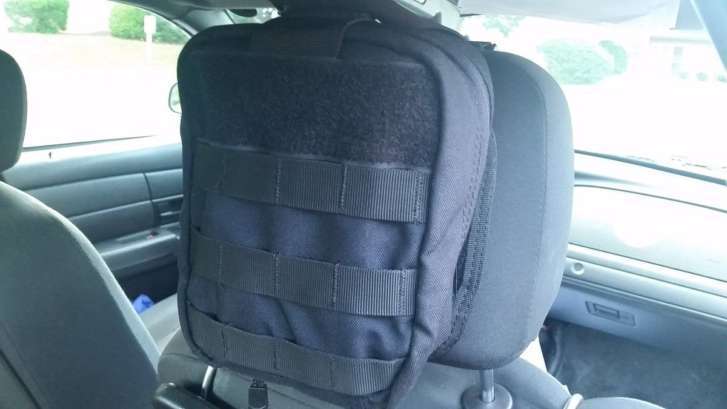
More and more police officers across the country are being outfitted with small trauma kits. And the kits have been powerful when it comes to saving lives in an emergency.

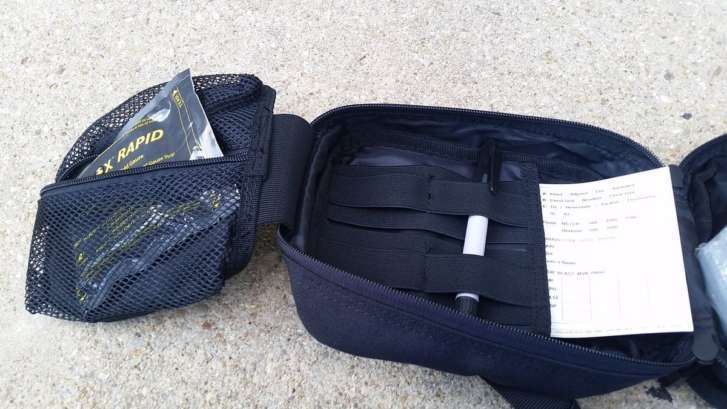
 These nondescript black packs attached to the back of the passenger seat headrest in police cruisers have been powerful when it comes to saving lives in an emergency. (WTOP/Kathy Stewart)The kits were initially meant to treat police officers who had been wounded, but officers have been using them more often to save the lives of citizens at various shooting and stabbing scenes.(WTOP/Kathy Stewart)
The Prince George’s County Police Department began using the first-aid kits in March 2014. (WTOP/Kathy Stewart)
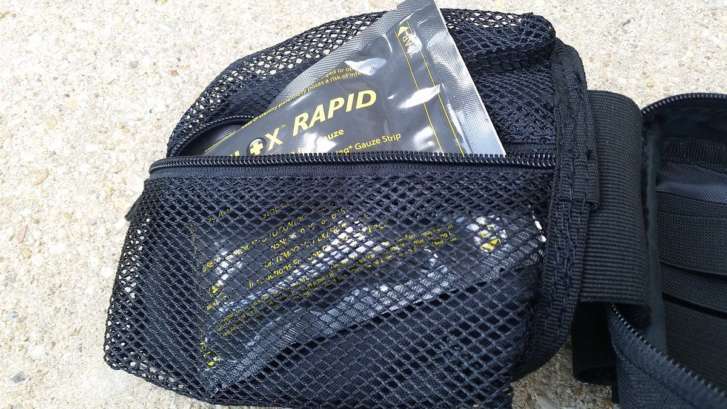
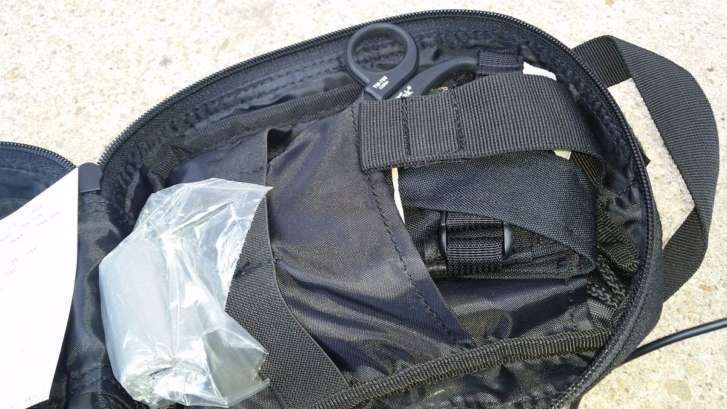
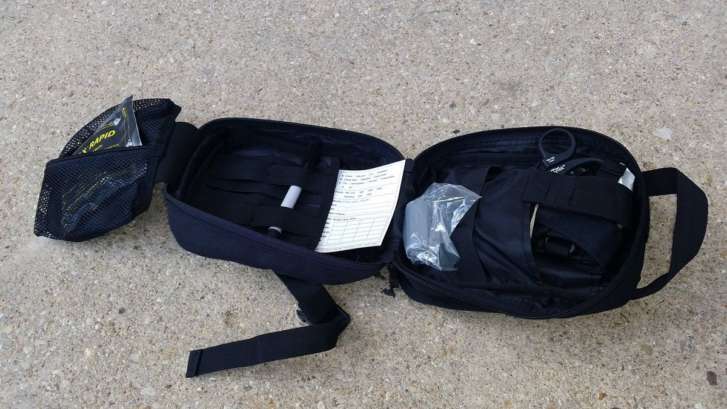
Police departments in Fairfax and Arlington, Virginia, were some of the front-runners in getting the first-aid kits. Alexandria, Virginia, and Montgomery County, Maryland, also have them; Charles County is in the process of implementing a similar kit. (WTOP/Kathy Stewart) So, what’s inside the kit? Police Cpl. George Harley says it’s basic equipment; there’s a tourniquet, Celox Rapid (a quick blood clotting agent), gauze, bandages and scissors.The kit also contains a nasopharyngeal tube which can be used on victims of severe facial injuries to restore an airway. So far, Harley says, this is the only piece of equipment in the kit that has not been used. (WTOP/Kathy Stewart)Also in the kit is a chest seal used for any kind of gunshot wound or wound to the torso. The chest seal can help prevent the lungs from collapsing, which can be life-threatening. (WTOP/Kathy Stewart)
WASHINGTON — More and more police officers across the country are being outfitted with small trauma kits. And these nondescript black packs attached to the back of the passenger seat headrest in police cruisers have been powerful when it comes to saving lives in an emergency.

In the three years that Prince George’s County police officers have had the tactical first-aid kits, or “tac kits,” they have saved the lives of 16 citizens with them.

The kits were initially meant to treat police officers who had been wounded, said Police Cpl. George Harley.

“Generally when we’re wounded, we’re in what’s called a ‘hot zone,’ where there’s still shots being fired.”

The fire department or emergency personnel can’t go into a hot zone to treat a wounded officer until the scene is secure.

Harley said that could mean life or death for the wounded officer.

But since they’ve gotten the kits, officers have been using them more often to save the lives of citizens at various shooting and stabbing scenes. Harley said the kits have been used 66 times, and only once was it used on an officer.

Hot zones are not secured when officers first arrive, so emergency personnel can’t help victims. Now, the kits can provide lifesaving help until medical personnel can get there.

So what’s in the kit?

Harley says it’s basic equipment; there’s a tourniquet, Celox Rapid (a quick blood clotting agent), gauze, bandages and scissors.

The kit also contains a nasopharyngeal tube which can be used on victims of severe facial injuries to restore an airway.

So far, Harley says, this is the only piece of equipment in the kit that has not been used.

Also in the kit is a chest seal used for any kind of gunshot wound or wound to the torso. The chest seal can help prevent the lungs from collapsing, which can be life-threatening. Harley described it as a piece of plastic that with adhesive material on one side that is able to stick to the chest or torso.

To date, the biggest lifesaving item in the kit has been the tourniquet.

Harley said an officer using the tourniquet can save a person from bleeding out and that officers like to carry the tourniquet on them and even sometimes bring their own tourniquet carriers to have it latched on their belts.

“Our officers say that it makes them feel pretty good when they do save a life of someone who probably would have died,” Harley said.

The Prince George’s County Police Department began using the first-aid kits in March 2014; training wrapped up in August 2014.

Police departments in Fairfax and Arlington, Virginia, were some of the front-runners in getting the first-aid kits, said Harley. Alexandria and Prince William County, Virginia, and Montgomery County, Maryland, also have them; Charles County is in the process of implementing a similar kit.